What does the HIV Action Plan mean for people living with HIV?
Last updated:Jacqui Stevenson, Senior Policy, Research and Influencing Manager, reflects on prioritising people's quality of life in HIV policy.
Jacqui Stevenson, Senior Policy, Research and Influencing Manager, reflects on prioritising people's quality of life in HIV policy.
Digital transformation holds real potential for strengthening the UK’s HIV response but only if the right safeguards, investment, and co-production with communities are put in place.
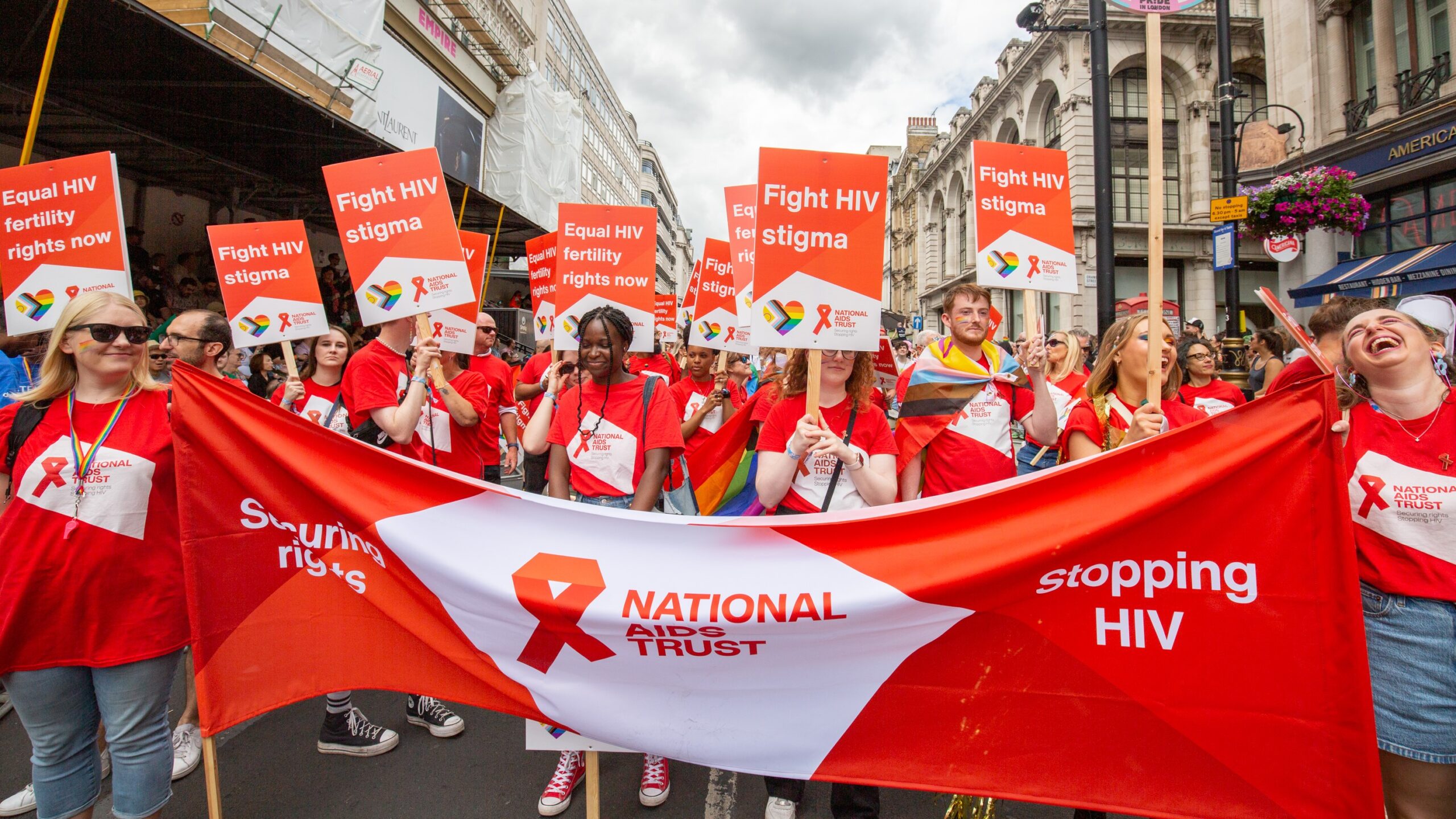
In this important month for the community, in a year that has seen increasing challenges and rollback of LGBT+ rights in the UK and around the world, we asked some colleagues, supporters and allies what Pride means to them in 2025.

The plight of refugees has been a high profile issue in the news, on social media and in the streets of Britain over the past few months and tens of thousands of people have shown their support for refugees who are currently seeking sanctuary in Europe. What tends not to make the front pages of the newspapers is that even once inside the UK, asylum seekers continue to live a precarious existence of enforced destitution.
Although HIV treatment and care in the UK isn’t perfect, we can be proud it’s amongst the best in the world. This is in stark contrast to the treatment of people living with hep C – and nowhere is this more apparent than in the current struggle to access new hep C treatment.
On the election of the Conservative Government in 2015 the Chancellor announced plans for further cuts to public expenditure. Yes, there would be cuts of £200million to the Department of Health budget but he assured us these cuts were to 'non-NHS spending'.
In a special blog for Refugee Week, we reflect on how UK asylum policy has shaped – and sometimes undermined – our ability to tackle HIV as a society.
Since the news that UKIP LGBT will be part of this year’s Pride parade, NAT has been asked whether we would consider boycotting the event, where we are a regular feature.

Last week we published the results of a nationwide survey of young men who are attracted to other men. The results are stark and telling of the current situation which many young gay men find themselves in: bullied at school; a curriculum which does not or did not meet their needs; and a poor understanding of HIV. All these factors add up to a fertile environment for HIV transmission-risk behavior.
Last year saw a record number of gay and bisexual men diagnosed with HIV in the UK. 1 in 17 gay men aged 15-59 are now living with HIV, rising to 1 in 8 in London. This compares to 1 in 360 of the UK population as a whole.